
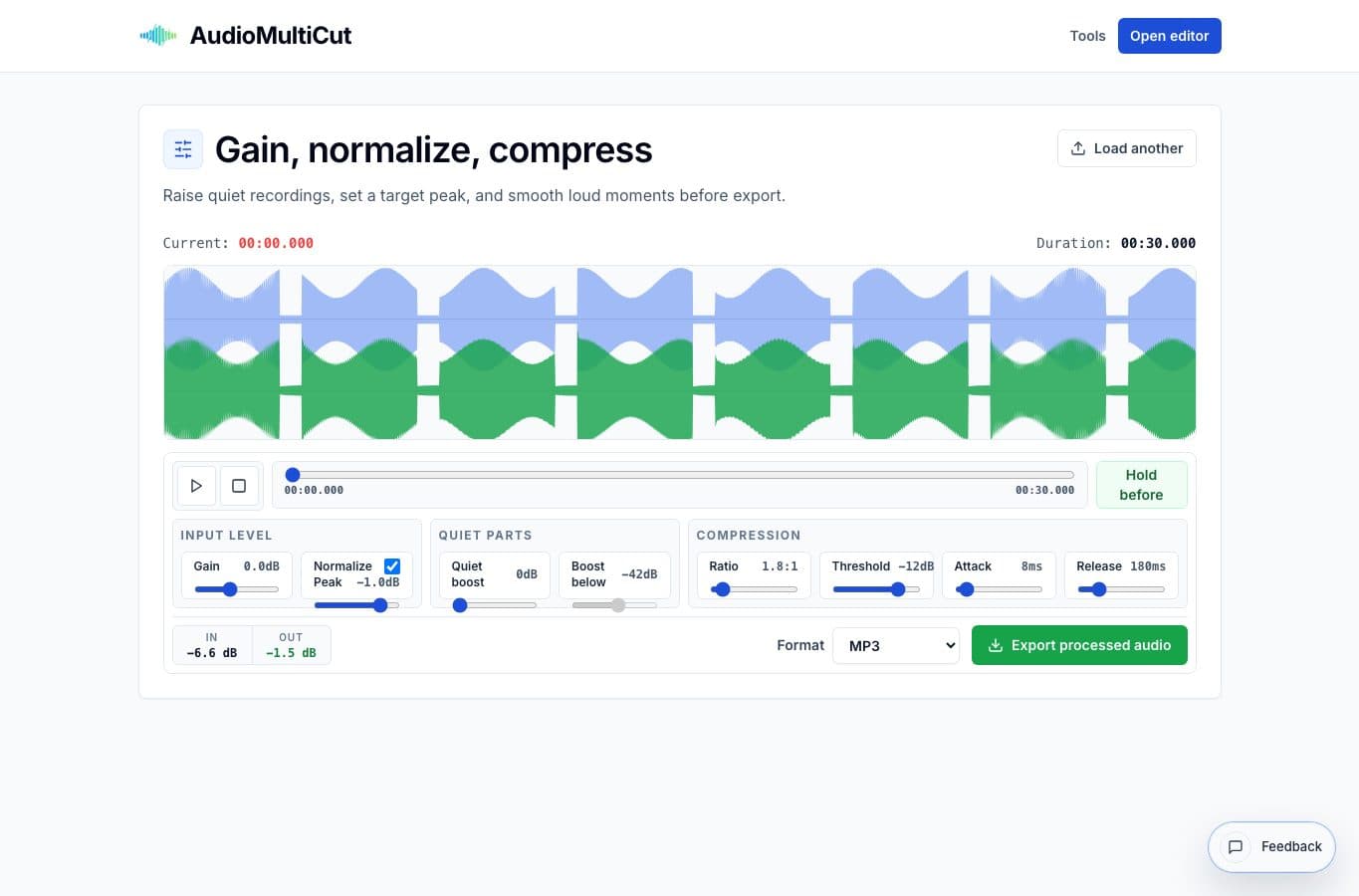
Normalization and compression are often treated like the same thing because both can make audio feel louder. They solve different problems.
Normalization changes the overall level so the loudest peak lands near a target. Compression reduces the gap between loud and quiet moments, which can make speech or uneven recordings easier to hear.
What normalization does
Peak normalization looks for the loudest moment in the file and raises or lowers everything so that peak hits the chosen target. If a recording is simply too quiet, this can be enough.
The limitation is that one loud clap, bump, or shout can control the whole result. The quiet parts may still stay quiet because normalization treats the full file as one level change.
What compression does
Compression turns down louder moments once they cross a threshold. After that, you can raise the overall level without the peaks jumping out as much. For speech, this can make the listener adjust volume less often.
Too much compression sounds flat, dense, or tiring. For everyday recordings, light compression usually beats aggressive settings, becuase the goal is clarity rather than a radio voice.
How to choose
If the file is quiet but consistent, start with gain and peak normalization. If the file has loud and soft parts that fight each other, add gentle compression. If the soft sections still disappear, use quiet lift carefully.
The best test is not the waveform. Listen on the device where the file will actually be played, especially if the listener will use a phone speaker.
More loudness guides
Make quiet or uneven clips easier to hear
Best Use Cases for an Online Audio Volume Normalizer
When to normalize audio, raise quiet recordings, add light compression, and export a more consistent file without turning the process into mastering.
Pick simple loudness cleanup or deeper processing
Best Audio Volume Normalizer Alternatives for Loudness Cleanup
Compare AudioMultiCut's volume normalizer with Audacity, Auphonic-style processors, DAWs, video editors, and simple web normalizers.
Raise the useful parts, protect the loud parts
How to Make Quiet Audio Louder Without Blowing Out the Peaks
A practical workflow for raising quiet recordings while avoiding clipping, pumping, and harsh compression.
Related pages and tools
Compare loudness changes by ear
Load a recording and switch between before and after while adjusting gain, normalization, and compression.